The Soccer Game That Moved Two Hours: What a Schedule Change Tells Us About Heat

Case of the Week, Min Wu, PhD · ai-public-health.com
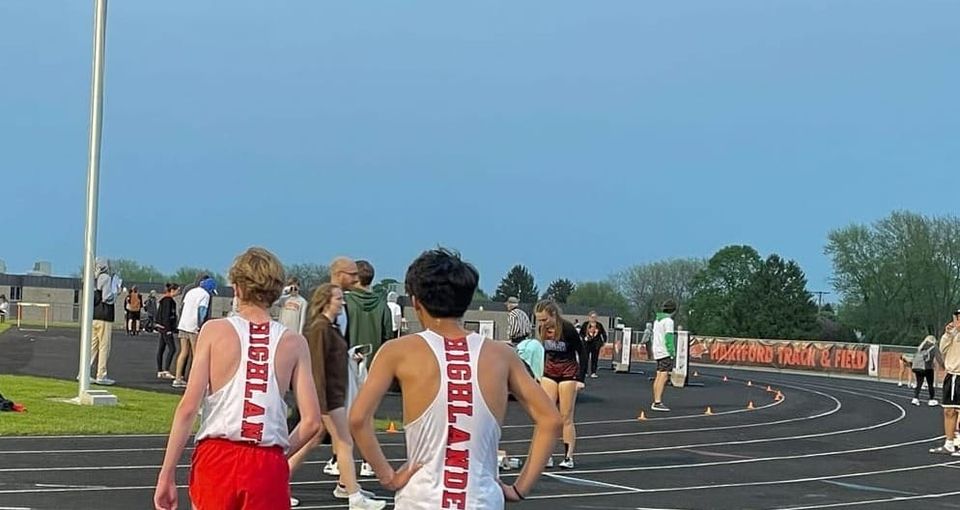
For the past twenty years, our Saturday soccer game has started at 3 PM. The same field, mostly the same group of people, the same casual rhythm of the weekend. Milwaukee summers used to feel short and gentle — less humid than further south, and when you ran or chased the ball and worked up a sweat, a small breeze off the lake felt like a reward.
We moved the game to 5 PM. Not by a vote, not by a debate. Just because 3 PM had stopped being playable. By the second Saturday in a row when someone said “it’s too hot,” the schedule shifted, and now 5 PM is the new normal.
Two hours. That’s the measurable change in our weekend, watched across two decades of the same field. A small adjustment, almost too ordinary to notice. And yet, when I started thinking about who else could make that adjustment — and who couldn’t — the whole question of heat exposure looked different to me.
A Schedule Most People Can’t Move
I could move my soccer game. The friends I play with could move theirs. Most of us work jobs where 3 PM on a Saturday is genuinely ours, and a two-hour shift is just a text message to the group chat.
That kind of flexibility is not how most lives are arranged.
A construction worker doesn’t get to move the shift to 5 PM because the heat index hit 95. The roof has to be dry by sundown, the concrete has to set, the contract has to deliver. The shift starts when the foreman says it starts, and “it’s too hot” isn’t a reason that survives a payroll review. An older woman whose blood pressure medication has to be taken at the same time each day can’t shift her routines around weather. Her body has been calibrated to a schedule that the heat doesn’t respect. A parent with a child in afterschool care can’t move pickup from 3 PM to 5 PM. The provider closes at 6, and there is no backup plan.
Look at any heat advisory issued by a public health agency, and you’ll find advice that quietly assumes you can rearrange your day around it. Avoid strenuous activity during peak heat hours. Stay indoors between noon and 4 PM. Reschedule outdoor work for the cooler parts of the day. This advice is correct. It’s also, for a large fraction of the population it’s aimed at, useless.
The Same Heat Is Not the Same Exposure
A 95°F afternoon affects different people radically differently. Some of that difference is physiological — age, medication, chronic condition, hydration. Public health understands this part well, and the advisories try to address it.
But some of the difference is structural in a way the advisories don’t reach. Two people with identical health profiles can experience completely different heat exposures based on whether their day is theirs to arrange. The retiree who can sit in a cool living room with the blinds drawn until evening is in a fundamentally different relationship with that 95°F afternoon than the home health aide who has to drive between three patients on the schedule the agency built six weeks ago.
We tend to talk about heat vulnerability in terms of who is fragile — older adults, people on certain medications, the unhoused, those without air conditioning. All of that matters. But there’s another vulnerability sitting alongside it that we rarely name: whose day belongs to them. Schedule flexibility is a form of resource. It costs nothing to provide to people who already have it, and it cannot be purchased by people who don’t. A heat advisory aimed at a population with no ability to act on it is a public health gesture, not a public health intervention.
This is the part that sat with me after we moved the soccer game. It wasn’t the temperature change that bothered me, exactly. It was realizing how much my ability to respond to it depended on conditions that have very little to do with the heat itself.
Frameworks That Ask the Right Question
I’ve been working for some time on a framework called PAPO — Policy-Aware Personalized Opportunity. I’ll write more about it next week. The short version is that it tries to ask a different question than most heat-response systems ask. Not “what is the heat advisory?” but “given who you are and what you actually have to do today, what is feasible for you right now?”
The shift sounds small. I think it isn’t. A heat advisory tells you the air is dangerous. An opportunity tells you that the cooling center six blocks east has capacity, that a city vehicle can pick you up in twenty minutes, that your neighbor has been notified and will check on you at 4. Those are different objects. The first is information. The second is a path through the next two hours of your day.
I want to be honest about what I don’t yet know. PAPO is a framework, not a deployed system. It’s published, it’s documented, the simulation work is in a public repository — but it has not been tested in a real city during a real heatwave, and there is a long distance between “this is the right question to ask” and “this is the right way to build the answer.” The conceptual move from warning to opportunity is, I think, sound. Whether the resulting system can be built in a way that actually serves the people it’s meant to serve — without being captured by data limitations, institutional inertia, or the same biases that produced the original gap — is something I’m still working out. The next round of simulation work is partly about finding where the framework breaks before someone has to live through that breakage in the field.
What the Game Was Telling Me
For now, the soccer game. Moved two hours later. Same field. Same group of friends. A small adjustment that we made without thinking about it, which is exactly the point — that was the privilege of the adjustment.
Somewhere across the city, people whose schedules were not theirs to move played out their afternoons under the same temperature, in different conditions entirely. The advisory was the same for everyone. The day was not.
As a member of the Springer Nature Author Affiliate Program, I may earn a small commission from purchases made through this affiliated link to my book. Support the author by checking out my textbook, Artificial Intelligence in Public Health: https://tidd.ly/4mH9389