About the site

Weekly essays and working papers from Min Wu, author of Artificial Intelligence in Public Health (Springer Nature, 2026).
Our story · Content map · The book and author
Our story
This site isn't a general AI blog. It's the living companion to Artificial Intelligence in Public Health — the place where the ideas in the book keep developing between editions. Every essay, preprint, and prototype published here exists to serve one goal: extending and improving the book's ideas. Nothing gets written just because it's trending. If it doesn't sharpen, test, or extend a specific chapter, it doesn't belong here — though the strongest of it may well end up shaping a future edition.
Content map
Each chapter below links to the published theory in the textbook, plus whatever's currently active — concept maps, SSRN preprints, and code. Chapters without active entries are open ground.
Chapter 1 — Introduction
Chapter 2 — AI Components
Chapter 3 — Design Models for AI in Public Health
Read the chapter →
Design Principle — "Encoding Justice as Design Principle". Wu, Min, Encoding Justice: A Design Principle for Educating Public Health AI Designers (September 12, 2026). Available at SSRN: https://ssrn.com/abstract=7452818 or http://dx.doi.org/10.2139/ssrn.7452818
Framework — "C-E-A Framework for AI Agents: Compliance, Efficacy, and Autonomy". (A new framework, not yet included in current chapter.)
Wu, Min. The C-E-A Framework for AI Agents: Compliance, Efficacy, and Autonomy — A Case Illustration in Personalized Robotic Care. July 30, 2026. Read on SSRN →
Application Design - "RFID-Based AI Agent Design for Community Heatwave Resilience" Wu, Min and Luo, Jake, RFID-Based AI Agent Design for Community Heatwave Resilience (October 01, 2026). Available at SSRN: http://dx.doi.org/10.2139/ssrn.7551199
Chapter 4 — Evaluation Models for AI in Public Health
Framework - "TFEF for Temporal Fit Evaluation Framework" (A new framework, not yet included in current chapter.) Wu, Min, The Temporal Fit Evaluation Framework (TFEF): Selecting Evaluation Methods in AI-Native Projects (August 27, 2026). Read in SSRN
Teaching artifact: "Interactive Concept Viewer for Evaluation Concepts" — where validity, reliability, and equity meet in practice.

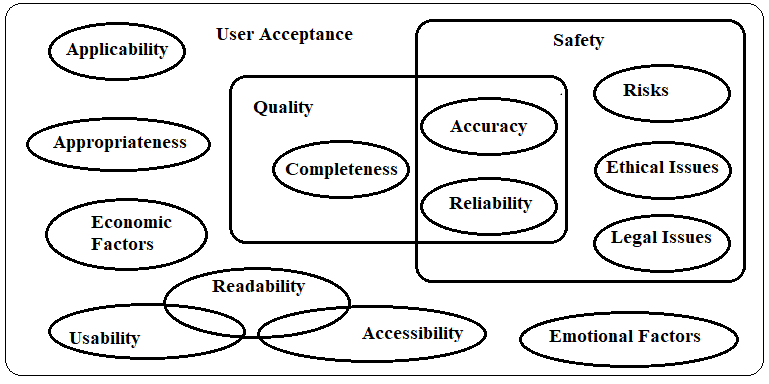
Interactive Concept Viewer for Evaluation Concepts
Chapter 5 — Data Issues for AI
Read the chapter →
Application of C-E-A framework to regroup those data issue concepts for AI in public health in Chapter 5. (A new application, not yet included in current chapter.) Wu, M. (2026). Data Issues in AI Applications for Public Health — An Application of the C-E-A Framework: Compliance, Efficacy, and Autonomy. Zenodo. https://doi.org/10.5281/zenodo.22726862, Read in Zenodo
Teaching artifact: "Interactive Concept Viewer for Data Issue Concepts".

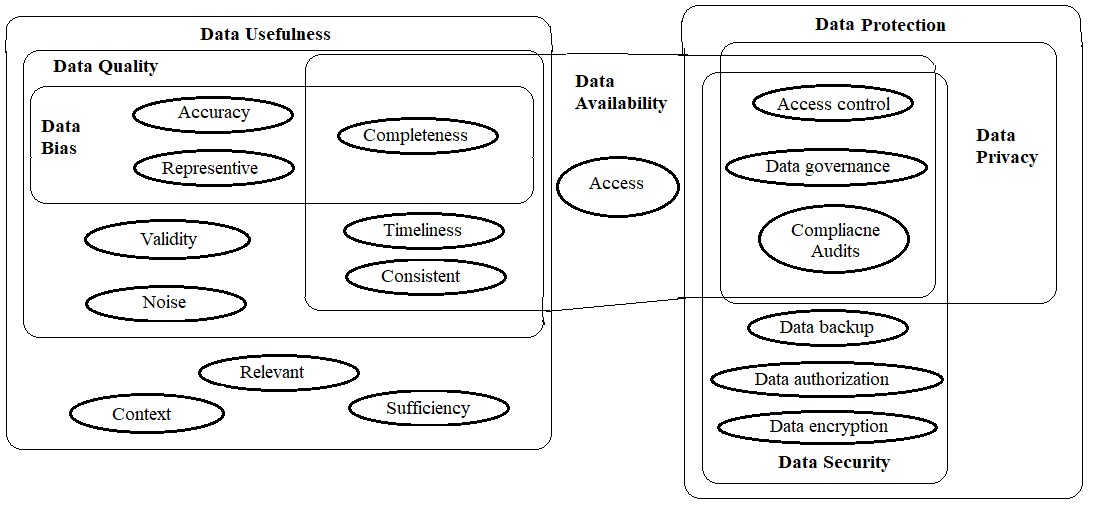
Interactive Concept Viewer for Data Issue Concepts
Chapter 6 — Public Health Domain Data for AI
Read the chapter →
Metadata of AI-powered Personal Health Records - Wu, Min, From Accurate to Deployable: A Metadata-aware C-E-A Framework for AI Agents in AI-powered Personal Health Records -Case Illustrations in Migraine and Type 2 Diabetes (September 24, 2026). Available at SSRN: http://dx.doi.org/10.2139/ssrn.7518960
Teaching artifact: "Interactive Concept Viewer for Personal Health Data Concepts and AI-powered PHRs"

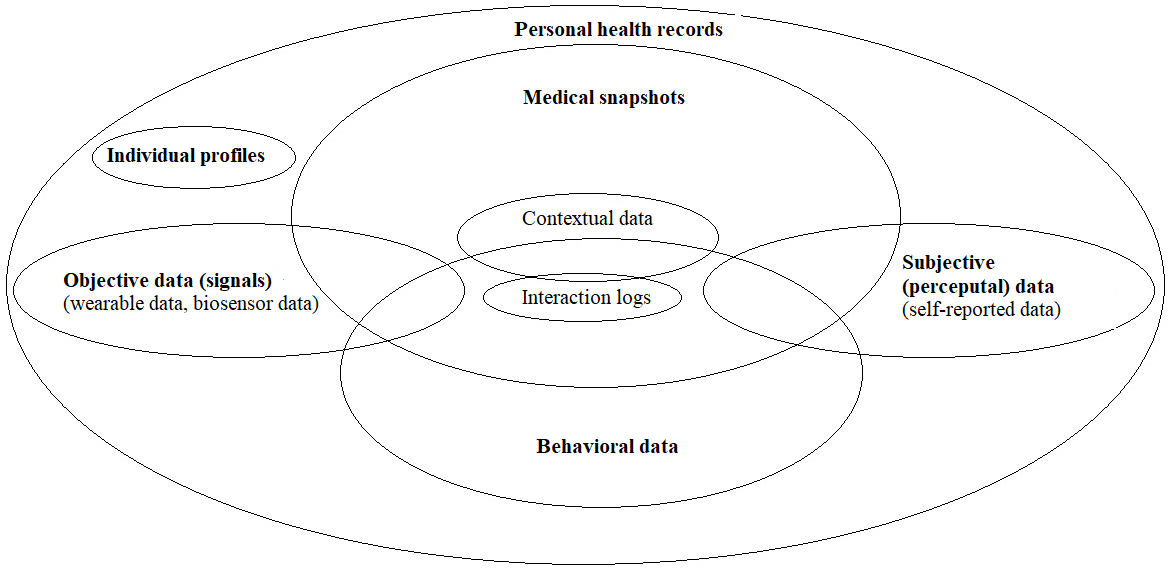
Interactive Concept Viewer for Personal Health Data Concepts

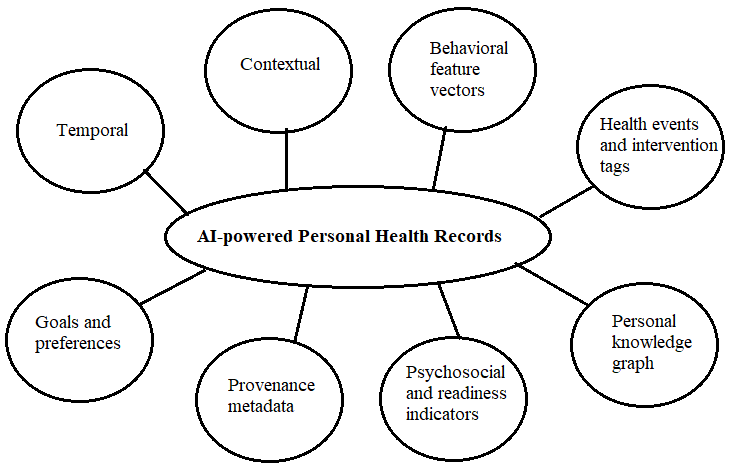
Interactive Concept Viewer for AI-powered Personal Health Records
Chapter 7 — AI Applications for Public Health Systemic Factors
Framework — "EquiRisk framework for Equity-Aware Risk Stratification".
Wu, Min. EquiRisk: Operationalizing Equity-Aware Risk Stratification for Diabetes Management in Food Deserts. Jan 28, 2026. doi:10.2139/ssrn.6150926 Read on SSRN →
Code — EquiRisk · Food Deserts Repo: A working implementation of the EquiRisk framework with synthetic data. View on GitHub →
Chapter 8 — AI Applications for Public Health Personal Responsibilities
Framework — "PAPO framework for Policy-Aware Personalized Opportunity".
Wu, Min. PAPO: A Policy-Aware Personalized Opportunity Framework for Heatwave Public Health Interventions. Feb 8, 2026. doi:10.2139/ssrn.6198260 Read on SSRN →
Framework - "Knowledge Engineering for PAPO". Wu, Min, Knowledge Engineering for the Policy-Aware Personalized Opportunity (PAPO) Framework: A Companion Ontology and Flowchart, With Heatwave Response as a Worked Example (August 19, 2026). Read in SSRN
Code — PAPO · Heatwave AI Repo: A simulation of the PAPO framework applied to extreme-heat public health interventions. View on GitHub →
Framework — "PMCO-AI framework for Personalized Motivation, Capability, and Opportunity, empowered by AI".
Wu, Min. PMCO-AI: Personalized Motivation, Capability, and Opportunity in the AI Era — A Case Illustration in Dementia Care. July 16, 2026. Read on SSRN →
Chapter 9 — From Acceptance to Thinking Partner
Read the chapter →
Framework - "ATPM for AI Thinking Partner Model". Wu, Min, The AI Thinking Partner Model (ATPM): A Conceptual Framework for Experiential User Acceptance of AI as a Conversational Partner -A Case Illustration in Public Health Emergency Decision-Making (August 25, 2026). Read in SSRN
Chapter 10 — AI and Workforce for Public Health
Chapter 11 — Challenges and Opportunities in the Future
Read the chapter →
Teaching artifact: "Interactive Concept Viewer for Long-term Challenges".

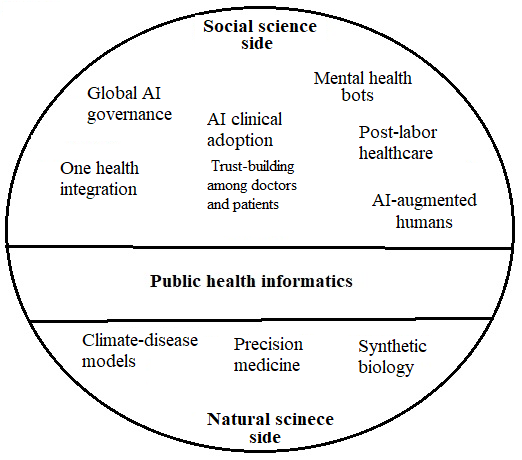
Interactive Concept Viewer for Long-term Challenges
Shared Frameworks
Framework - Middle-Range Theory: PAPO, EquiRisk, and PMCO-AI.
Wu, Min, Bridging Grand Theory and AI Practice in Public Health: Through Middle-Range Theory, Demonstrated in PAPO, EquiRisk, and PMCO-AI (August 10, 2026). Read in SSRN
The book and author
The book. Artificial Intelligence in Public Health (Springer Nature, 2026), by Min Wu, is the foundation this entire site is built to extend. The essays, frameworks, and code above are candidates being tested here.
As a member of the Springer Nature Author Affiliate Program, I may earn a small commission from purchases made through this link: tidd.ly/4mH9389
About Min Wu. Min Wu earned his Ph.D. in medical informatics from the University of North Carolina at Chapel Hill in 2003. He is now an associate professor in the Zilber College of Public Health at the University of Wisconsin, Milwaukee, where his research focuses on identifying unmet public health needs and implementing technological solutions. His writing has appeared in the Journal of Medical Informatics, the Journal of Medical Systems, and Academic Radiology, and he is a past recipient of the Best Article Award from the Journal of Digital Imaging. He has taught health informatics graduate courses for more than 20 years, giving him a deep, broad grounding in biomedical informatics. His recent review articles cover big-data applications in biomedical research and health care, and wearable technology in health care, and he closely tracks AI's impact on public health — from preventing disease to promoting health and prolonging life.
Browse all repositories on GitHub: ai-public-health-specs