Bitter Makes Durable
Case of the Week, Min Wu, PhD · ai-public-health.com
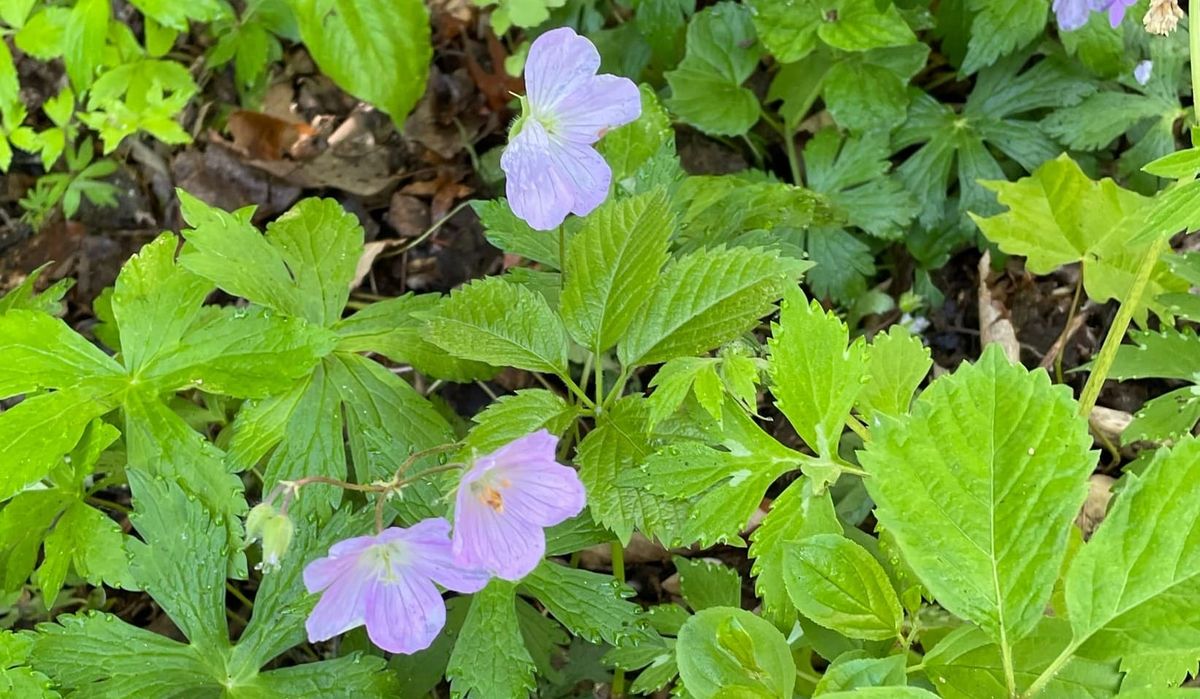
Last year my backyard cucumbers came in well enough that this spring I gave the same small bed to beans too — same seed, same watering routine, same daily few minutes of attention that had worked the year before. Two months in, both plants were coming along fine. Then, almost overnight, the beans were gone. Not yellowed, not diseased — cleared down to bare stems. Three feet away, the cucumber vines are still standing, untouched.
The Part I Didn't Plant
The explanation turned out to be simple: something — a rabbit, by the look of the bite marks — had eaten the beans for exactly what they are, a meal. Beans, it turns out, were the wrong plant for that bed.
Cucumber vines, stems, and leaves are covered in small, stiff hairs that make them unpleasant to chew. The leaves also carry cucurbitacins, compounds that taste distinctly bitter — bitter enough that a rabbit or squirrel typically quits after one exploratory bite. None of this is a response to anything. The plant isn't noticing a predator and reacting to it. The defense was built in before any predator arrived, and it asks nothing of the plant to keep working.
Beans carry no equivalent. To a rabbit, they are soft, palatable, and worth the trip. The only thing standing between my bean plants and a hungry animal was a fence I never built. Whatever decided this outcome was decided back in April, long before anything showed up in July to test it.
A Structural Parallel
That isn't really a story about gardening technique. It's a story about where defense lives. Internal focus is useless if you ignore external predators — a rule that applies as much to a public health program as to a raised garden bed. Effort spent perfecting the thing you're growing doesn't count for much if none of it went toward what happens when that thing meets an environment that was never designed to be kind to it.
Where PMCO-AI Comes In
I built PMCO-AI, my human behavior-change framework, around a simple claim: opportunity comes first. It extends COM-B — the Capability-Opportunity-Motivation model from Michie, van Stralen, and West — by adding AI as the mechanism that personalizes each ingredient and delivers it in real time: Personalized Motivation, Personalized Capability, Personalized Opportunity. In most of the cases I've built it around — dementia care, heat response — opportunity is what varies. A caregiver's feasible option changes minute to minute depending on the patient's mood and the room they're in; an older resident's feasible option in a heatwave depends on whether a cooling center has capacity right now. When opportunity is the thing moving, opportunity decides the outcome, and motivation or capability alone can't compensate for its absence.
The garden is the opposite case, and it's worth naming precisely because it's opposite. The cucumber and the bean shared the same yard, the same rabbit, the same July. Opportunity — in the sense of exposure, of what the environment made available to a predator — didn't vary between them at all. What varied was Capability: the cucumber's built-in bitterness and rough texture, present before the rabbit ever arrived, against the bean's lack of any equivalent. When opportunity is fixed across two agents in the same environment, capability is the variable left standing to explain the different outcomes.
That's not a contradiction of PMCO-AI's opportunity-first claim. It's the claim's boundary condition: opportunity decides the outcome when it varies; capability decides it when opportunity doesn't.
The Eighteen-Month Test
If a fixed opportunity landscape shifts the weight onto capability, the same question is worth asking at the scale of an entire program, not just a garden bed.
Picture a composite, illustrative case — not a specific program, but a plausible one. A county health department launches an AI-supported chronic-disease home-monitoring program for low-income residents. At launch, the personalized motivation, capability, and opportunity design is sound, and so are the basic organizational conditions the program needs to function. The program works, and people enroll.
Eighteen months later, three pressures arrive at once. A venture-funded telehealth app starts marketing an easier-seeming, clinically weaker alternative to the same residents. A new county administration proposes cutting the program's grant in the next budget cycle. And a data breach at an unrelated county agency triggers a local spike in mistrust toward any government data collection — this program included. None of this is about whether the program works. It's the opportunity landscape any program serving this population would face at some point — the same yard, the same rabbit, arriving eighteen months late.
Nothing in the program's original design predicted any of this, and none of it was a flaw in the original design. What decided whether the program survived wasn't whether it saw this coming. It was what the program already had the capability to withstand — not what opportunity it was given, because the opportunity landscape was the same one every comparable program was standing in.
A program that depends on someone continuously advocating for it is running on that person's motivation, not the program's own capability — it holds as long as the advocate's attention holds, and it fails the moment that attention lapses, gets reassigned, or simply runs out. A program with built-in capability — open data governance a resident can inspect without asking permission, a community advisory board with real authority rather than a ceremonial seat, workflows embedded in what residents were already doing rather than one more thing added on top — doesn't need anyone's continued motivation to keep functioning. It has a far better chance of making it to Month 6 and Year 2 for the same reason the cucumber has a far better chance of making it through July: the competitor, the funding proposal, and the mistrust spike were the fixed conditions; what shifted the odds was what the program already was.
What This Analogy Doesn't Prove
I want to be honest about the limits of stretching a garden metaphor this far.
PMCO-AI's Capability dimension, as I've built and tested it, describes an individual's skills, knowledge, and practical capacity — a caregiver's ability to administer medication safely, say. The county health department scenario stretches "capability" to mean something structural: a program's governance, its community authority, its embedded workflows. I don't actually know that those are the same construct wearing different clothes, or two different things that happen to rhyme. This essay treats them as one because the pattern fits, not because I've tested that the underlying mechanism is identical at both scales.
The cucumber comparison raises a related question. Building capability isn't free — something had to select for bitterness over evolutionary time, the way someone had to build the governance structure and negotiate the advisory board's real authority. Once built, it doesn't need continuous motivation to keep functioning — though, as a bitten cucumber leaf reminded me a few days after I first drafted this (more on that below), "doesn't need motivation" isn't the same as "can't fail." That much I think holds at both scales. What I'm less sure of is whether every structural defense I'd call "capability" in a public health program is genuinely structural the way a cucumber's chemistry is — or whether some of what I'm calling capability is really motivation with a longer memory: a policy that holds because the people who fought for it are still around to enforce it, dressed up as if it runs on its own.
If that's the more accurate story, the distinction that matters isn't capability versus opportunity, or even capability versus motivation as clean categories. It's which of a program's defenses would survive everyone who built them leaving the building — and I don't yet have a clean way to test that from the outside.
Bitter makes durable.
Observer's Insight
I don't think I would have seen this as clearly without losing the beans. When you design something — a program, a curriculum, a garden bed — it's tempting to spend all your attention on whether it works on day one, because day one is when you're watching closely enough to notice. The harder discipline is designing for the days you won't be watching at all. My cucumbers didn't need me to defend them— and mostly they still don't, though a few days after I first wrote this, I found a bitten cucumber leaf too. That isn't a reason to throw out the observation; it's a reason to state it more carefully. The bitterness doesn't make a cucumber untouchable. It makes it harder to bother with than the alternative growing three feet away, which is a different and more honest claim. That isn't a compliment to the cucumber. It's a design spec, with the fine print now attached.
It's worth carrying that design spec into how I think about this AI moment more broadly. AI is very good, right now, at multiplying opportunity — more feasible options, surfaced faster, matched more personally to who someone actually is in the moment. That's real, and it's the case most of my own work has focused on. But capability doesn't move at the same speed. A caregiver's skill, a program's governance, a person's own built-in capacity to withstand pressure — AI can help build these too, but slowly, the way months of practice sharpens judgment rather than an app fixing it in an afternoon. And capability is exactly what's left standing when the opportunities thin out — when the AI-matched option isn't there, when the environment turns hostile, when the bad-case scenario nobody planned for shows up anyway. An era this good at manufacturing opportunity can quietly forget to ask what each of us, or each program, actually is once the opportunities run out. That's usually the moment capability was supposed to answer for.
Support Author: As a member of the Springer Nature Author Affiliate Program, I may earn a small commission from purchases made through this affiliate link to my Springer Textbook (Artificial Intelligence in Public Health): https://tidd.ly/4mH9389