Who Should Climb the Ladder? Point AI at the Hazard, Not the Worker
Case of the Week, Min Wu, PhD · ai-public-health.com
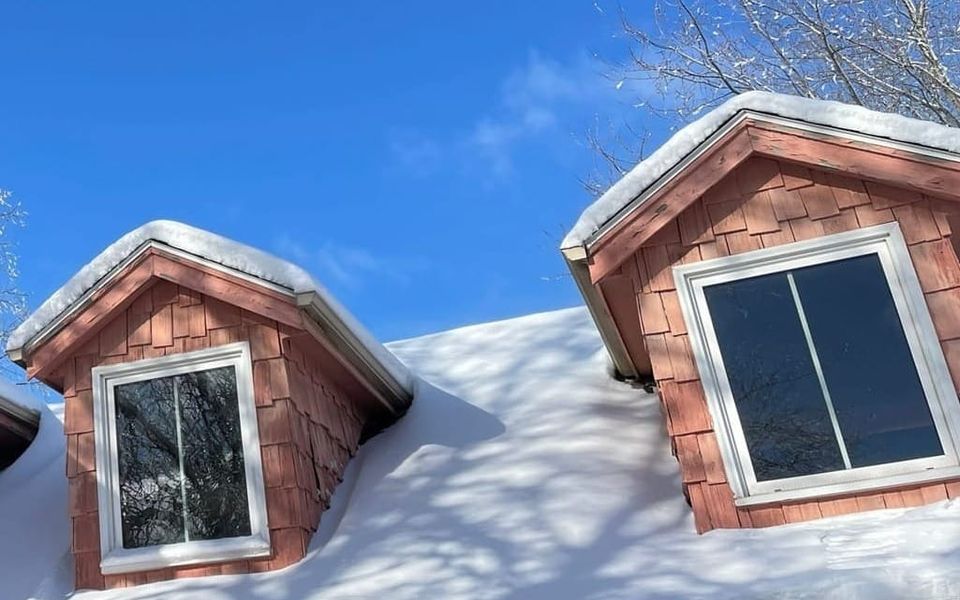
In 2026, Wisconsin gave us more rain than I remember, and my gutters had not been cleaned in several years. The garage gutters I can handle myself. They sit at first-floor height, and I am comfortable on a short ladder. The second floor is different. I am afraid to climb that high and stand on the roof. So I hired professionals to do it. I watched them climb the ladder and step onto the roof. It did not look safe to me. I had paid someone else to take the risk I would not take myself.
That small transaction holds a question the debate about AI and jobs mostly skips.
The fear is about jobs. The harm is in tasks.
When people worry that AI will take their work, they picture the whole job disappearing. Much of the public conversation answers in the same unit: jobs lost, jobs created. But a job is a bundle of tasks, and the tasks are not equal. Some carry the skill and judgment that make the work worth doing. Others carry the risk.
In "Teach the Apprentice, Starve the Master?" I argued that what AI is built to copy decides which jobs are at risk. Here I ask a narrower question: inside a job, which task should AI take first?
Their job is knowing roofs, gutters, and how water leaves a house. That is worth keeping. The part I would remove is the time they spent standing on the roof. Nobody's livelihood depends on the fall risk itself.
This is not a small hazard. In 2024, falls, slips, and trips killed 370 construction and extraction workers in the United States, more than a third of the 1,032 deaths in those occupations (Bureau of Labor Statistics, Census of Fatal Occupational Injuries 2024).
Public health already has a ranking for this
Occupational health does not start with gloves and warning signs. It starts with a ranking called the hierarchy of controls, from most to least effective:
- Eliminate the hazard.
- Substitute something safer.
- Engineer the hazard away from the worker.
- Change the rules and training.
- Hand out protective equipment.
The lower rungs work only if people do everything right, every time. The higher rungs do not depend on that.
Seen this way, an AI agent or a robot that takes over a dangerous task is a substitution, near the top of the ladder. That is a prevention argument, not a productivity argument. In Chapter 3, "Design Models for AI in Public Health" (doi:10.1007/978-3-032-15872-7_3), of my textbook Artificial Intelligence in Public Health, I listed ten occupations with severe hazards, from healthcare and construction to mining, firefighting, and sanitation. I treated those hazards as unmet public health needs: the places where design effort should go first.
Start with the hazard, not the AI
My gutters make one more thing clear. Once you look at the hazard first, AI is not always the answer.
- A cleaning pole worked from the ground takes away the climb altogether. That is elimination of the fall hazard, and it needs no AI.
- Gutter guards cut down how often anyone has to go up. That is an engineering control, and it needs no AI either.
- Judgment from up high is where intelligence earns its place. Is the roof damaged? Is a downspout blocked? A drone can look first, so a person climbs only when there is something to fix.
I made a similar point in "Choices Make the Load": the simpler tool often wins. Here, the hazard sets the order. Ask which control removes the risk, and reach for AI only where simpler controls cannot.
This also answers a question I left open in "The Robot Has a Role, Not Just a Function." There I argued that a robot's assigned role, not its hardware, decides what it does, and I wondered who should assign that role. For dangerous work, part of the answer is now clear to me: let the hazard assign it.
One question for builders and policymakers
For AI developers, hazard-first design points capability where the public benefit is easiest to see. A tool that keeps a worker off a roof edge is easier to explain, and easier to trust, than a general promise of efficiency.
For governance, it offers one question to ask of any automation proposal: which hazard does this remove, and for whom? Safety standards, prevention funding, and public procurement already speak this language. AI can be held to it too.
Where the line blurs
I do not want to make this too neat. In some jobs, the hazard and the work cannot be pulled apart. A nurse at the bedside of an infectious patient cannot hand that exposure to a machine without handing over the care itself. AI and robots can take parts of it: triage, deliveries into isolation rooms, the documentation that feeds burnout. They cannot take the presence.
Removing a dangerous task can also remove paid hours. If I install gutter guards, the professionals come less often. So hazard-first AI is not a promise of zero job loss. It is a claim about where to aim: when we decide what AI should take from human work, the first candidates should be the parts that injure, sicken, or kill the people doing it.
The next time a tool promises to take over a task, ask the question I asked standing in my yard. Who climbs the ladder now, and does anyone have to?
The Hazard Makes the Target
If you could hand one dangerous task in your work or around your home to a machine, which would it be? Reply or leave a comment — I'd love to hear.
Want to read the earlier essays in one place? They’re collected in AI and Public Health, Volume 1, in ebook and paperback.
As a member of the Springer Nature Author Affiliate Program, I may earn a small commission from purchases made through this affiliated link to my book. Support the author by checking out my textbook, Artificial Intelligence in Public Health: https://tidd.ly/4mH9389