The Wood Stove I Almost Never Use: What Cheap Backup Actually Buys You
Case of the Week - Min Wu, PhD · ai-public-health.com
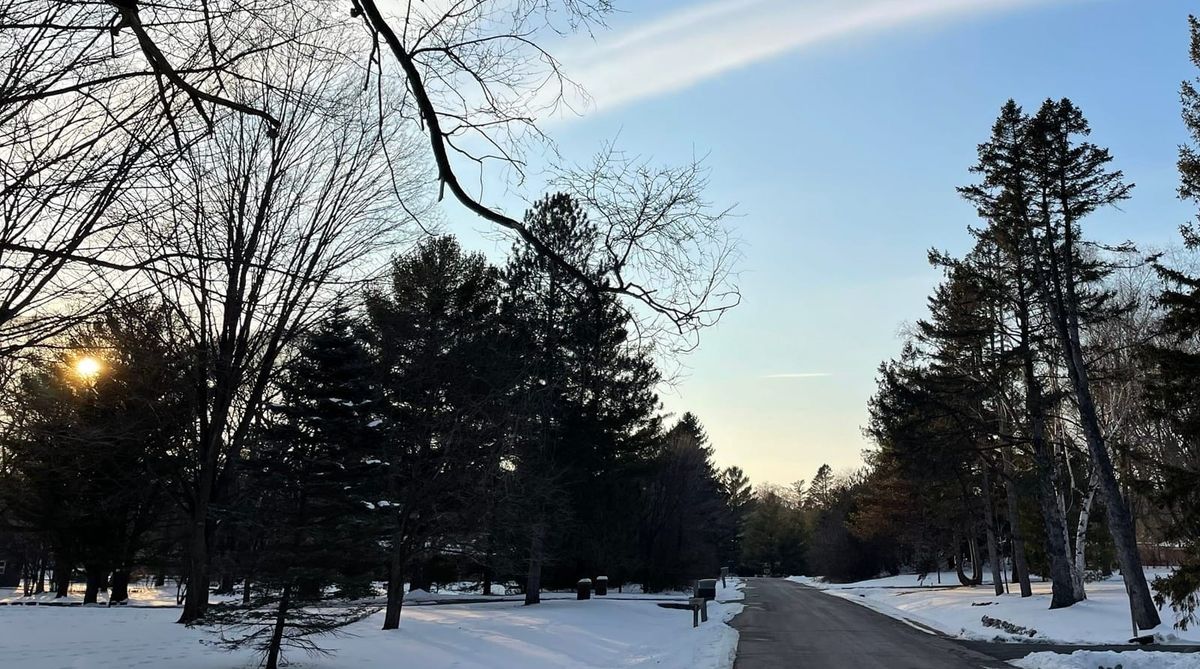
Last winter, after a heavy snowstorm, the leaning utility pole at our street corner snapped. Our block lost power for two days. After that, I bought a small wood stove from Temu — nothing fancy, under a hundred dollars.
I grew up in a place where power outages weren't unusual, and I don't remember anyone treating them as emergencies. People had a kerosene lamp, a thermos of hot water, neighbors who would notice if your house went quiet. The infrastructure was thinner, but the margins around it were thicker. Somewhere along the way, in the move to a more reliable grid, we seem to have traded those margins for the assumption that the grid will always be there.
That was almost a year ago. I've used the stove exactly once since, to roast sweet potatoes (烤地瓜) like we were camping. By any honest accounting, it was an impulse buy that hasn't paid for itself.
And yet, every time the forecast turns — icy rain, high wind, a winter storm warning — I notice something. I'm calmer than I used to be. Not because I expect to need the stove. Because I know it's there.
What the Stove Actually Bought Me
That, I think, is what the cheap stove actually bought me. Not heat. Not cooked food. Peace of mind under uncertainty.
This is worth pausing on, because it inverts how we usually think about preparedness. We tend to evaluate backup plans by how often we use it — and by that measure, my stove is a failure. But the function of a backup isn't to be used. It's to make the days you don't use it feel different. The stove sits in the corner doing nothing, and that nothing is the product.
That logic — judge a backup by how often you use it — made sense when equipment was expensive. If a tool cost a month's wages, leaving it idle was a kind of waste, and utilization was a fair test of whether you should have bought it at all. But the things that quietly fail us now aren't expensive. A $90 stove. A used solar panel. A recycled battery. The cost of the equipment dropped to almost nothing. What's expensive now is the attention, the worry, the half-distracted Tuesday spent watching the forecast. We're still using an old test on a new problem.
The real cost of preparedness today isn't the equipment. It's the cognitive load you carry on every uneventful day until something happens.
From a Stove to a Rural Clinic
Once you see this, you start noticing how much of it scales.
Picture a small rural clinic — the kind that sits an hour from the nearest hospital, serving a few thousand people across a wide stretch of county. Inside, there's a refrigerator full of vaccines and insulin. A laptop with patient records. A blood pressure monitor, a pulse oximeter, a few phones that need to stay charged so the nurse can reach the on-call doctor.
When the grid is steady, none of this is interesting. When the grid fails — and in many rural communities, it fails more often than the city numbers suggest — all of it is at risk at once. The vaccines warm. The records go dark. The phone dies before the call connects.
Now imagine a few used solar panels on the roof and a recycled battery in a closet. Modest. Cheap. Maybe assembled from parts the original market was throwing away. On a normal Tuesday, this little system is invisible — the clinic runs off the grid like always, and the panels just sit there doing nothing.
But the nurse who works there knows it's nothing. And so when the storm comes through and the lights flicker out, the fridge stays cold. The laptop stays on. The phone gets charged. The clinic keeps being a clinic.
The Quiet Form of Capacity
That's the same logic as my wood stove, scaled up to where the stakes actually matter. The point was never the equipment. The point was what the equipment lets you stop worrying about — so you can do the work in front of you.
There's a quieter argument folded into all of this. The cheap stove, the used panels, the recycled battery — these aren't survival gear. They're a form of capacity that earns its keep without ever being measured by a utilization metric. I want to call this quiet capacity — capacity whose value is its readiness, not its activity. We don't have a good name for that yet. Most of our economic intuitions still treat unused things as waste. But for a category of cheap, redundant equipment in an uncertain time, unused is exactly the right state. Used would mean something went wrong.
I have more thoughts on this, especially about what it means for rural health design when reliability itself becomes a luxury good. But I'll save those for another post.
For now, the cheap stove is in the corner. Doing nothing. Worth every penny.
As a member of the Springer Nature Author Affiliate Program, I may earn a small commission from purchases made through this affiliated link to my book. Support the author by checking out my textbook, Artificial Intelligence in Public Health: https://tidd.ly/4mH9389